Blogs
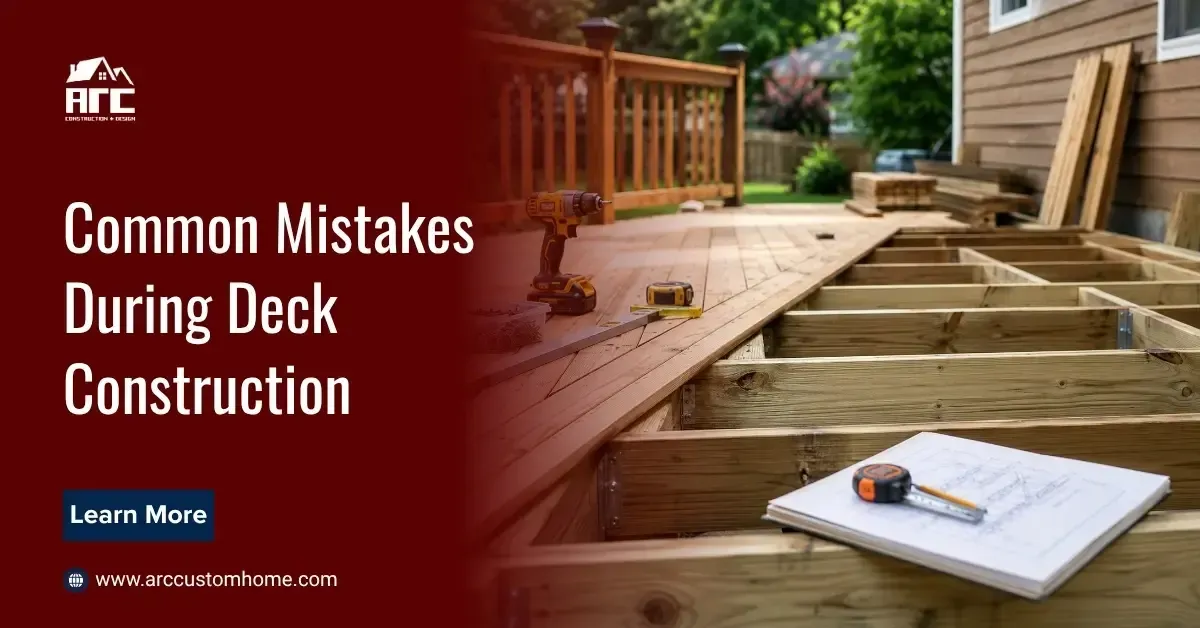
Common Mistakes During Deck Construction - How to Avoid Them
TL;DR
A bad ledger board, weak footings, and skipped permits cause most deck failures.
Coastal weather in San Juan Capistrano speeds up rot, so material and hardware choice matter more here.
A licensed, insured contractor and a real plan help you avoid rebuilds and safety risks.
The most common mistakes during deck construction are a bad ledger board, weak footings, skipped permits, wrong fasteners, poor drainage, the wrong material, rushed planning, and hiring an unlicensed contractor.
Most deck failures trace back to a handful of errors. These issues can lead to a sagging deck, a failed inspection, or a costly rebuild. At ARC Construction, our crews have torn out enough bad decks in South Orange County to know where the trouble starts. In San Juan Capistrano, coastal moisture speeds up rot, HOA rules can stall your project, and Orange County soil is not the same everywhere. Here are the mistakes homeowners make most and how to avoid them.
1. Attaching the Ledger Board the Wrong Way
The ledger board holds up nearly half your deck’s weight, so a bad attachment is the top cause of collapse.
This board connects your deck to your house. It carries a huge load. You need to bolt it into the house frame, not the siding. Many DIY builders use nails instead of lag bolts. Nails pull loose over time. Lag bolts hold firm under weight and movement.
Proper flashing matters just as much as the bolts. Flashing keeps water from soaking into the wood behind the ledger. Without it, moisture builds up and rot sets in fast. In San Juan Capistrano, coastal humidity makes this worse. Salt air and moisture get into small gaps fast. That gap can rot your deck frame within a few years.
Ledger Board Attachment Mistakes
How to avoid it: Use lag bolts, add flashing, and secure the ledger board to the house frame, not the siding.
2. Pouring Weak or Shallow Footings
Footings that sit too shallow or spaced too far apart let the whole deck shift and sag.
A footing is the concrete base that holds up each deck post. If it is too shallow, the ground under it shifts with the seasons. That shift moves your whole deck frame out of level. Post spacing matters too. Posts spaced too far apart put more weight on each joist than it can handle. This causes bounce, sag, and weak spots as time passes.
Southern California does not deal with a hard frost line like colder states do. Soil type still matters, though. Clay-heavy soil near San Juan Capistrano expands and contracts with moisture changes. If you pour a footing without checking the soil first, it can crack or shift fast.
What weak footings usually come from:
Footings poured too shallow for the deck’s weight
Posts spaced too far apart for the joist size
No soil check before pouring concrete
Concrete poured on loose or unpacked dirt
How to avoid it: Check the soil first, pour footings to the right depth, and space posts to match your joist size.
3. Skipping Permits or Ignoring Local Codes
Building without a permit in San Juan Capistrano can mean fines, a forced teardown, or trouble when you sell the house.
Local building codes exist to keep your deck safe. They cover footing depth, railing height, guardrail spacing, and how the deck attaches to your home. California adopts these rules through the California Building Standards Commission, and your city inspector works from them. Skipping this step feels faster, but it almost always costs more later.
Do You Need a Permit for a Deck in San Juan Capistrano?
Most raised decks attached to a house need a permit here. Any deck over 30 inches high, or one tied into your home’s structure, usually triggers a permit review from the City of San Juan Capistrano building department.
A permit is usually required if your deck:
Sits higher than 30 inches off the ground
Attaches directly to your house
Covers a large footprint in the yard
Includes stairs, a roof, or an enclosed space
HOA Approval and Orange County Rules
Many South Orange County communities require HOA approval before construction starts. Planned neighborhoods like Ladera Ranch and Laguna Woods often have design rules on railing style, color, and height. Ignoring those rules can mean fines or a forced redesign, even if the city already approved your permit.
How to avoid it: Pull the right permit and get HOA sign-off before construction starts, not after.
4. Using the Wrong Fasteners or Hardware
Cheap or mismatched screws and brackets rust fast and weaken the whole structure.
Not every fastener works with every material. Galvanized screws work fine with treated lumber, but they react badly with some composite board hardware. Stainless steel costs more at first, but it holds up far longer near the coast. Mismatched metal causes corrosion. Corroded hardware loosens fast, and a loose deck post or railing connection becomes a safety risk.
Fastener Choices by Material
How to avoid it: Match your fastener to your decking material, and choose stainless steel near the coast.
5. Poor Drainage and Airflow Under the Deck
Trapped moisture under a deck is the top cause of wood rot and mold.
Grading the ground under your deck matters. Water needs somewhere to go. If the ground slopes toward your house instead of away from it, moisture pools right where you do not want it. Gaps between deck boards also matter. Boards set too tight trap water on the surface. A small gap lets water drain through and air move underneath, which keeps deck maintenance simpler down the road.
Simple ways to improve drainage and airflow:
Grade the ground so water flows away from the house
Leave a small gap between deck boards
Add vents or gaps along the skirting
Clear leaves and debris from under the deck often
How to avoid it: Grade the ground away from the house, leave board gaps, and keep airflow open underneath.
6. Picking the Wrong Material for Southern California Weather
Sun, salt air, and heat wear down cheap materials fast, so material choice matters more here than most homeowners think.
Treated lumber costs less at first, but it needs regular sealing to survive UV exposure. Composite deck boards cost more at first, but they resist fading, warping, and rot without yearly upkeep. Homes near Dana Point, San Clemente, and Laguna Beach deal with heavier salt air than inland cities like Lake Forest and Aliso Viejo. That salt speeds up corrosion on hardware and fading on lumber. Choosing the right material is not just about looks. It is about how long your outdoor space actually lasts.
Material Comparison for Coastal Homes
How to avoid it: Choose a material rated for sun and salt air, especially if you are closer to the coast.
7. Rushing the Planning Stage
A rushed plan leads to a deck that is the wrong size, in the wrong spot, or missing what you actually wanted.
Before starting a deck, homeowners need a real plan. That means deciding on size, shape, and purpose first. Do you want space for a grill? Room for a table and chairs? A quiet spot to relax? Rushed drawings lead to layout problems you cannot fix once the frame is up. Some homeowners find the deck is only half of what they wanted, and the project grows into a room addition or a kitchen remodel that opens onto the new outdoor space. Working that out on paper costs nothing. Working it out after the posts are set costs plenty.
Questions to answer before you plan your deck:
What will you mainly use the deck for?
How many people will use it at once?
Does it need to handle a grill, hot tub, or furniture?
What size fits your yard and your budget?
How to avoid it: Answer these questions first, then finalize your layout before construction begins.
8. Hiring a Contractor Without a License or Insurance
An unlicensed contractor can leave you paying for mistakes, injuries, or code violations out of your own pocket.
Always check a contractor’s license before signing anything. In California, you can look up any deck builder’s license status through the Contractors State License Board in a couple of minutes. Insurance matters just as much. Without it, an injury on your property during construction can become your legal problem, not theirs.
Before you hire, check for:
An active CSLB license number
Proof of liability insurance
Workers’ comp coverage for the crew
Real reviews or past project photos
How to avoid it: Confirm the license and insurance before you sign a contract, not after work starts.
How ARC Construction Avoids These Mistakes
Three generations of the Carrieri family have worked hands-on in Orange County construction. ARC Construction builds every deck under CSLB license #1006389, and the team speaks English and Spanish, so nothing gets lost between the homeowner and the crew. The same crew handles decks, additions, and full home builds, which means the framing on your deck gets built to the same standard as the framing on a house.
Every project follows the same process, and that process catches these mistakes before they become a problem on your deck:
Consultation: We walk the property and talk through your goals first.
Custom design: We plan the layout, size, and materials around your yard and budget.
Permitting: We pull the right permits and handle HOA approval steps.
Construction: Our crew builds the ledger, footings, and frame to code, not shortcuts.
Final walkthrough: We inspect every detail with you before we call the project done.
FAQs
Do I need a permit for a deck in San Juan Capistrano?
Most raised or attached decks need a permit here. Check with the city and your HOA before construction starts to avoid delays.
How deep should deck footings be?
Depth depends on your soil and local code, but most residential footings run at least 12 to 18 inches deep in this area.
Can I build a deck myself?
Small, low decks are possible as a DIY project. Anything raised, attached to your home, or over code height limits needs a licensed builder.
How long does deck construction take?
Most residential decks take two to four weeks from permit approval to final walkthrough, depending on size and material choice.
Call a Professional and Skip the Rebuild
Avoiding the common mistakes during deck construction comes down to three things: solid structure, proper permits, and the right materials for your climate. Skip any of these, and you risk a collapse, a failed inspection, or a rebuild in a few years. A deck that lasts comes down to getting the basics right the first time.
ARC Construction builds decks across San Juan Capistrano and South Orange County, permits included and inspections handled. Call (949) 710-5062 or reach out for a free estimate and we will walk your yard with you.

Talk To Us
(949)-710-5062
Location
26522 Briarwood Ln San Juan Capistrano, CA 92675
Business Hours
Mon - Sat: Open 8:00 am - 5:00 pm
Sunday: Closed
Copyright © 2026 | ARC Construction
Powered by Web Panda