Blogs
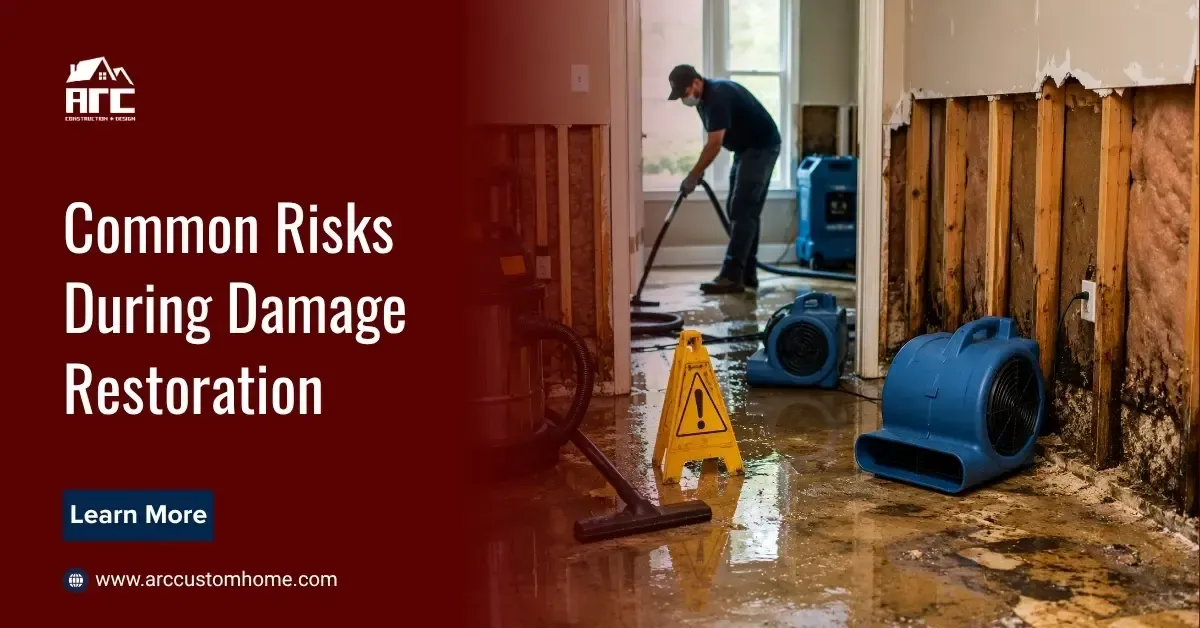
What Are the Most Common Risks During Damage Restoration?
TL;DR
Toxic air, weak structures, and live wiring are the biggest damage restoration risks.
DIY cleanup often traps hidden moisture or spreads contaminants deeper into your home.
A licensed restoration team protects your health, your home, and your insurance claim.
The most common risks during damage restoration are toxic air, unstable structures, electrical hazards, and hidden mold.
Damage restoration work exposes homeowners to dangers most people never think about. Fire, flood, and storm damage all bring hidden threats along with the visible mess. ARC Construction has walked into enough damaged homes in South Orange County to know the danger is rarely the part you can see. In San Juan Capistrano, coastal humidity speeds up mold growth, and older homes may hide asbestos or lead behind the walls. Acting fast and knowing the risks keeps you and your family safe.
1. Breathing in Toxic Air and Airborne Particles
Smoke, soot, and dust after fire damage carry particles that hurt your lungs, so breathing them in ranks among the biggest hidden risks in restoration.
Soot looks small, but it carries real danger. Tiny particles from smoke can hold carbon monoxide and other harmful chemicals. Water damage adds its own airborne threat too, since damp drywall and wet insulation release mold spores into the air fast.
An ordinary dust mask does not block these particles. A proper respirator does the job right. If the air smells strange or looks hazy, leave the room and call a restoration service.
In San Juan Capistrano, older homes often release more particles once water intrusion disturbs the walls or insulation. Older building materials can hold onto contaminants for decades.
2. Standing in an Unstable or Weakened Structure
Fire damage and water damage can weaken floors, ceilings, and walls, so walking through a damaged home too soon risks a collapse.
Fire burns through support beams. Water damage soaks into wood framing and weakens it from the inside. Both leave a structure that looks fine but fails under weight. A damage restoration team checks for these risks before anyone steps inside.
Signs a Room Is Not Safe to Enter
A sagging or bowed ceiling
A floor that feels soft or springs back
Cracks running across walls or corners
A strong smell of gas anywhere in the home
3. Electrical Shock From Water-Damaged Wiring
Water and electricity together create a serious shock and fire risk, especially once wiring gets wet.
Wet wiring can shock anyone who touches a switch, outlet, or appliance. Standing water near an outlet turns a simple room into a serious hazard. Power should get shut off at the source before anyone enters a flooded space, which is the same warning federal safety agencies give in their flood safety guidance.
An electrician needs to check the wiring before power comes back on. Skipping this step risks a fire hidden behind the walls.
4. Contact With Mold and Hidden Moisture
Mold growth can start within 24 to 48 hours after water damage, and touching it spreads spores through the air fast.
A musty smell or dark spots on a wall often signal hidden mold. Mold exposure triggers allergies, coughing, and breathing problems in many people, and the EPA mold guidance explains why drying the source matters more than scrubbing the surface. Moisture readings taken by a professional catch damp spots long before mold appears.
San Juan Capistrano’s coastal air holds more moisture than inland areas. Homes closer to the water in Laguna Beach deal with this more often than homes further inland in Lake Forest or Aliso Viejo. That extra humidity speeds up mold growth compared to drier parts of Orange County.
5. Exposure to Hazardous Materials in Older Homes
Homes built decades ago may hold asbestos or lead, and disturbing these materials during cleanup can release them into the air.
Old insulation, old paint, and old flooring often hold these materials. Sanding, tearing, or even sweeping can send fine particles into the air you breathe. The EPA covers where asbestos shows up in homes, and its Renovation, Repair and Painting rule applies to any home built before 1978. Testing before cleanup starts protects everyone working in the home.
Age matters a lot here. Established communities like Laguna Woods have plenty of homes from that era, while newer neighborhoods like Ladera Ranch were built long after those materials were banned.
Where Hazardous Materials Commonly Hide
6. Sewage and Biohazard Contamination
Sewage backups carry bacteria and waste that can make you sick, so this type of damage always needs a professional restoration team.
Household cleaners cannot handle this level of contamination. Sewage exposure risks infection through skin contact or breathing in fumes. Trained restoration professionals use gear and equipment built for black water and other contaminated sources.
7. Making the Damage Worse With DIY Cleanup
Cleaning up fire damage or water damage yourself can trap moisture or push contaminants deeper into your home.
Many homeowners try to clean up fast to save money. That instinct often backfires and turns a small problem into secondary damage. Rushed cleanup misses hidden water sources behind walls or under flooring.
What Not to Do After Fire or Water Damage
Do not run the HVAC system, since it spreads soot and spores
Do not wash walls or carpet yourself
Do not enter damaged rooms alone
Do not touch wet electronics or outlets
8. Delaying Restoration and Letting Damage Spread
Waiting too long after damage lets moisture, mold, and structural problems get worse and cost more to fix.
The first 24 to 48 hours matter most. Water extraction and drying need to start fast to stop secondary damage from setting in. A short delay can turn a one-room repair into a whole-house project.
How Delay Changes the Outcome
Heavy damage also changes the size of the job. A kitchen hit by a fire or a burst supply line often ends as a full kitchen remodel. When damage takes out a large part of the house, the repair moves closer to new home construction, and the budget questions start to look a lot like the ones homeowners ask about a room addition.
How ARC Construction Handles These Risks Safely
Three generations of the Carrieri family have worked hands-on in Orange County construction. ARC Construction carries CSLB license #1006389, which any homeowner can confirm through the Contractors State License Board, and the bilingual crew keeps every step clear for the homeowner.
Every damage restoration project starts with a safety check, and that check protects your home and your family from the start:
Safety assessment: We check air quality, structure, and wiring before anyone enters the space.
Consultation: We walk you through what we found and what comes next.
Restoration plan: We build a plan around the exact type and extent of the damage.
Restoration work: Our crew handles extraction, drying, and repairs with the right equipment.
Final walkthrough: We confirm the space is safe and fully restored before we call it done.
FAQs
Is it safe to stay in my home during damage restoration?
It depends on the damage type. Fire, sewage, or major water damage often means staying elsewhere until the space is safe.
How fast should restoration start after water or fire damage?
Restoration should start within 24 to 48 hours. Waiting longer raises the risk of mold growth and structural damage.
Can I clean up fire or water damage myself?
Small, surface-level messes are fine to handle yourself. Anything involving structural damage, mold, or sewage needs a professional team.
Do I need to test for asbestos or lead before restoration?
Older homes should get tested before any demolition or major cleanup starts, since disturbing these materials releases them into the air.
Call a Professional to Stay Safe During Restoration
Knowing the common risks during damage restoration helps you protect your health and your home. Skip the wrong step, and you risk structural issues, mold growth, or an injury that could have been avoided. A trained team spots these hazards before they become a bigger problem.
ARC Construction handles damage restoration across San Juan Capistrano and South Orange County, from the first safety check to the final walkthrough. Call (949) 710-5062 or get in touch for a free estimate, and we will come look at the damage with you.

Talk To Us
(949)-710-5062
Location
26522 Briarwood Ln San Juan Capistrano, CA 92675
Business Hours
Mon - Sat: Open 8:00 am - 5:00 pm
Sunday: Closed
Copyright © 2026 | ARC Construction
Powered by Web Panda