Blogs
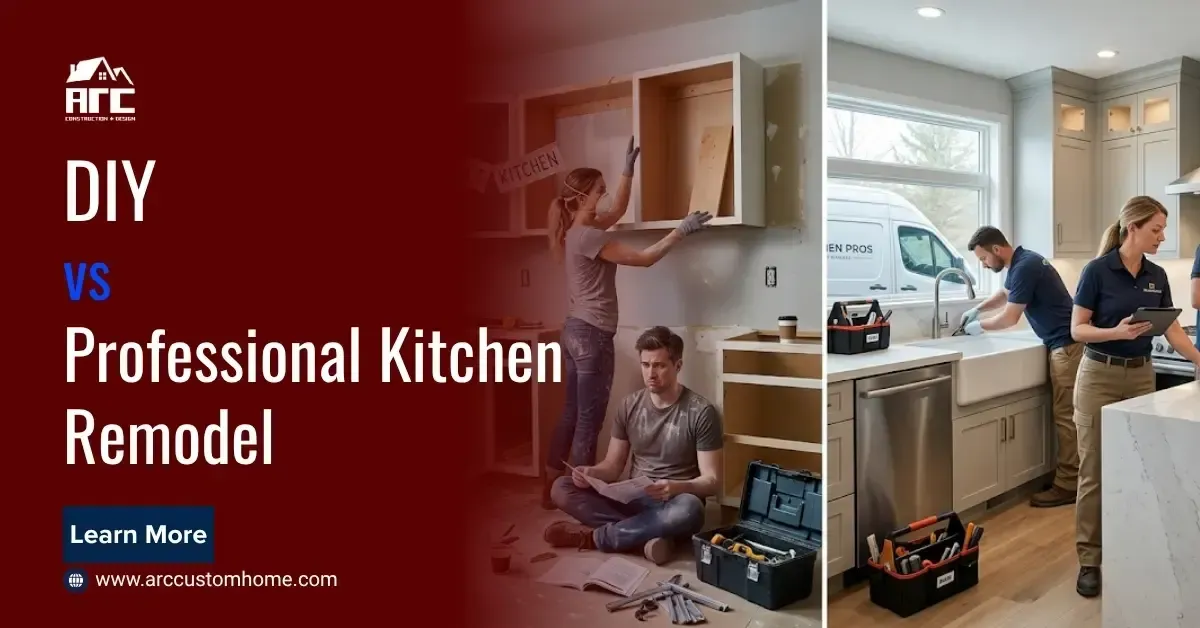
DIY vs Professional Kitchen Remodel: Which One Is Right for You?
So you want a new kitchen. The cabinets are outdated, the countertops have seen better days, and the layout stopped making sense years ago. Now you're stuck on the biggest question of the whole project: should you tackle a DIY vs professional kitchen remodel?
It's a fair question. And the answer isn't the same for every homeowner in San Juan Capistrano. Your budget, your skill level, the scope of work, and your tolerance for living without a functioning kitchen all play a role.
This guide gives you real numbers, honest pros and cons, California permit rules, and a decision framework that actually helps. No vague advice. No filler. Just what you need to make the right call for your home and your wallet.
ARC Construction put this together specifically for homeowners across Orange County who are weighing their options before ripping out a single cabinet.
What Does a Kitchen Remodel Actually Cost?
Cost drives most of the DIY remodel vs contractor debate. But most online guides dodge the real numbers. Let's fix that.
Average DIY Kitchen Remodel Cost Breakdown
A full DIY kitchen renovation typically runs between $7,000 and $20,000, depending on scope, material choices, and how much you already own in tools.
Here's where the money goes:
Cabinets (refinishing to full RTA replacement): $200 to $6,000
Countertops (laminate to mid-grade granite): $600 to $3,500
Flooring (luxury vinyl plank or ceramic tile): $800 to $2,800
Backsplash (peel-and-stick to subway tile): $200 to $600
Paint and supplies: $100 to $400
Tools and equipment rental: $200 to $1,000
Fixtures and hardware: $150 to $800
These numbers assume you supply all the labor. They don't include plumbing, electrical, or structural work.
Average Professional Kitchen Remodel Cost
A professionally managed kitchen remodel in Southern California typically costs between $26,000 and $55,000 or more, depending on scope and finishes.
Labor accounts for roughly 25% to 35% of total project cost. That's the obvious difference. But professionals also access trade pricing on materials, which partially offsets the labor premium.
According to 2025 data from Hanley Wood Market Intelligence, a minor midrange remodel averages around $28,500 nationally. In Orange County, expect that number to trend higher due to labor demand, material transport, and local permit costs.
If you're looking for ways to stretch your renovation budget further, material selection and phased work can make a real difference.
Side-by-Side Cost Comparison Table
Professional costs include labor, project management, warranty coverage, and trade-priced materials.
Pros and Cons of a DIY Kitchen Renovation
A DIY kitchen renovation can save you serious money. But the savings aren't always as big as they look on paper.
Where DIY Saves You Money
The biggest win is eliminating labor costs. On a $40,000 professional remodel, labor might represent $10,000 to $14,000. Doing the work yourself cuts that line item to zero.
You also control where you source materials. Shopping clearance sales, using IKEA RTA cabinets, or buying remnant stone slabs can shrink costs even further.
And you set your own schedule. No waiting two weeks for a subcontractor to show up. You work when it fits your life.
Hidden Costs Most DIYers Overlook
Most homeowners don't budget for the stuff that creeps in quietly.
Tool purchases and rentals add up fast. A tile saw, miter saw, orbital sander, and specialized bits can run $300 to $800 if you don't already own them.
Material waste from measurement mistakes is real. Cutting tile wrong, ordering the incorrect cabinet size, or buying the wrong trim adds unplanned trips to the home improvement store.
Then there's the cost of living without a kitchen. Takeout meals for two to four months can easily hit $1,500 or more.
Don't forget dumpster rental ($300 to $600), time off work for deliveries or inspections, and the stress factor that doesn't show up on any receipt.
Common DIY Kitchen Remodel Mistakes (and What They Cost to Fix)
These are the errors that turn a budget remodel into a budget nightmare. Avoiding common mistakes during a kitchen remodel can save you thousands.
Wrong cabinet measurements requiring reorder: $500 to $2,000. Off-the-shelf cabinets don't come in every size. Measure wrong once, and you're ordering again or paying for custom filler pieces.
Unlevel flooring causing gaps and buckling: $300 to $1,500 to tear up and redo. Self-leveling compound and proper subfloor prep aren't optional steps.
Improper plumbing connections leading to leaks: $800 to $3,000+ in water damage repair. A slow leak behind a cabinet can go unnoticed for weeks.
Electrical wiring errors that fail inspection: $500 to $2,000 to rip out and redo with a licensed electrician. In California, unpermitted electrical work also creates insurance and resale problems.
Countertop template mistakes on stone slabs: $1,000 to $3,500. Granite, quartz, and quartzite slabs cannot be recut once fabricated. A bad template means buying a new slab.
One major mistake can wipe out every dollar you saved by skipping professional labor.
Pros and Cons of Hiring a Kitchen Remodeler
The decision to hire a kitchen remodeler comes with a higher price tag. But the trade-offs go beyond money.
What a Professional Contractor Brings to the Table
A licensed remodeler handles design, demolition, construction, plumbing, electrical, permits, inspections, and final walkthrough as one coordinated project.
You get licensed subcontractors for GFCI outlet installation, gas line connections, and load-bearing wall modifications. These are not YouTube tutorial territory.
Professionals also manage the permit process. In San Juan Capistrano, that means pulling the right permits from the City of San Juan Capistrano Building Division, scheduling inspections at the correct stages, and making sure the work passes on the first attempt.
ARC Construction handles every phase of kitchen remodeling in San Juan Capistrano, from initial design consultation through final inspection sign-off.
And you get a warranty. If something fails within the warranty period, the contractor fixes it at no additional charge.
The Downsides of Hiring a Pro
The upfront cost is the obvious one. A professional remodel costs significantly more than a self-managed project.
You also give up some day-to-day control. Design decisions still belong to you, but the construction sequence, subcontractor scheduling, and material delivery timelines are managed by the contractor.
Availability can be a factor too. Good remodelers in Orange County stay booked. You may wait several weeks before work begins.
And not every contractor delivers the same quality. Vetting matters, and we'll cover exactly how to do that later in this guide.
Kitchen Tasks You Can DIY vs Tasks That Need a Pro
Not every part of a kitchen remodel requires the same skill level. The smartest approach is knowing where the line sits between "I can handle this" and "I need a licensed professional."
Beginner-Friendly DIY Kitchen Projects (Level 1 to 2)
These jobs need basic tools and minimal experience:
Interior wall painting (primer, two coats, clean edges)
Replacing cabinet hardware (knobs, pulls, hinges)
Installing a peel-and-stick or simple tile backsplash
Swapping a faucet on existing plumbing connections
Replacing light fixtures on existing wiring
Demolition and removal of old cabinets and countertops (with caution around plumbing and wiring behind walls)
Intermediate DIY Projects (Level 3, Some Experience Needed)
These need proper tools, some construction knowledge, and patience:
Assembling and installing RTA cabinets (ready to assemble)
Laying luxury vinyl plank or ceramic tile flooring
Installing under-cabinet LED lighting on existing circuits
Refinishing or repainting cabinets (proper sanding, priming, and topcoat technique)
Installing open shelving with wall anchors rated for the load
Always Hire a Licensed Professional for These (Level 4 to 5)
California law requires licensed tradespeople for these tasks:
All electrical work beyond simple fixture swaps (new circuits, AFCI/GFCI installation, panel upgrades)
Plumbing modifications (moving supply lines, relocating drains, gas line connections)
Structural changes (removing or modifying load-bearing walls)
Countertop fabrication and installation for stone slabs
HVAC and ventilation changes (range hood ducting to exterior)
Any work involving the California Energy Code (Title 24) compliance
Skipping the licensed pro on these tasks doesn't just risk poor quality. It creates legal exposure, insurance problems, and inspection failures.
The Hybrid Approach: Best of Both Worlds
Most homeowners don't need to pick one side of the DIY vs professional kitchen remodel argument. The hybrid approach splits the work so you save where you can and hire out where it counts.
How to Split the Work and Save 15% to 30%
Here's the strategy: you handle demolition, painting, hardware installation, backsplash, and basic cosmetic upgrades. A licensed contractor handles all electrical, plumbing, gas, structural, and countertop work.
This approach can reduce total labor costs by 15% to 30% compared to a fully contracted remodel.
The key is coordination. Tell your contractor upfront which tasks you plan to handle. That way, the construction sequence stays logical. You don't want to paint walls before the electrician runs new wiring, for example.
ARC Construction works with homeowners on hybrid projects across San Juan Capistrano and the surrounding area. During the initial consultation, we scope exactly which tasks make sense for you to take on and which ones we'll manage.
Kitchen Remodel Permits in California: What You Need to Know
This is the section most kitchen remodel guides skip entirely. And it matters the most if you live in San Juan Capistrano or anywhere else in California.
What Requires a Permit in San Juan Capistrano
Under the California Building Standards Code, you need a building permit for:
Structural changes: Removing walls, adding windows or doors, modifying the floor plan
Plumbing modifications: Moving supply lines, relocating drains, adding or moving a sink, gas line work
Electrical changes: New circuits, outlet relocation, panel upgrades, AFCI protection for kitchen branch circuits
Mechanical work: New range hood venting to the exterior, HVAC modifications
You do not need a permit for:
Painting walls and cabinets
Replacing cabinet hardware
Swapping existing fixtures in the same location
Installing new countertops (without plumbing changes)
Cabinet refacing
Replacing flooring (without subfloor structural changes)
What Happens If You Skip the Permit
The consequences are real and expensive.
The city can issue a stop-work order, halting your project until permits are obtained. That means delays, added fees, and wasted time.
Unpermitted work that fails inspection may need to be torn out and redone to code. That doubles the cost of the original task.
Your homeowner's insurance may deny claims for damage in areas with unpermitted modifications. A kitchen fire caused by faulty wiring that was never inspected? That claim could be rejected.
At resale, California disclosure laws require sellers to report known unpermitted work. Buyers see it as a liability. Appraisers lower the home's value. Deals fall apart.
ARC Construction pulls all required permits and schedules every inspection as part of every kitchen remodeling project. You never have to guess whether the work is code-compliant.
DIY vs Professional Kitchen Remodel Timeline
Time is the hidden cost no budget spreadsheet captures. A torn-apart kitchen means no sink, no stove, and no counter space for weeks or months.
How Long a DIY Kitchen Remodel Takes
Plan for 3 to 6 months if you're working evenings and weekends on a full remodel.
Here's a rough breakdown:
Demolition: 1 to 2 weekends
Cabinet installation: 2 to 4 weeks (evenings and weekends)
Flooring: 1 to 2 weeks
Countertop fabrication and install: 1 to 3 weeks (includes template wait time)
Backsplash: 1 weekend
Painting and finishing touches: 1 week
And that timeline assumes nothing goes wrong. Add in measurement errors, material backorders, or a failed inspection, and you're looking at 6 months or longer.
Your kitchen is unusable for most of that window.
How Long a Professional Kitchen Remodel Takes
A professional team typically completes a full kitchen remodel in 3 to 8 weeks, depending on scope, material lead times, and permit scheduling.
The difference comes from full-day work crews, coordinated subcontractor scheduling, and experience that eliminates trial-and-error. A task that takes you three weekends takes a professional crew a single day.
ARC Construction provides a detailed project timeline during the initial consultation. You'll know exactly when demolition starts, when each trade comes in, and when you get your kitchen back.
Frequently Asked Questions
Is it cheaper to remodel a kitchen yourself?
On paper, yes. A DIY kitchen renovation typically costs $7,000 to $20,000, while a professional remodel runs $26,000 to $55,000+. But hidden costs like tool purchases, material waste, meal expenses, and mistake repairs narrow that gap. The hybrid approach often delivers the best balance between savings and quality.
Do I need a permit to remodel my kitchen in California?
Yes, if the project involves structural, electrical, plumbing, or mechanical changes. Cosmetic updates like painting, hardware replacement, and countertop swaps (without plumbing changes) do not require a permit. Always check with the building department in San Juan Capistrano before starting work.
What parts of a kitchen remodel can I do myself?
Painting, cabinet hardware, backsplash tile, basic flooring, and demolition are all reasonable DIY tasks. Electrical, plumbing, gas line work, and structural changes require a licensed contractor in California.
How long does a professional kitchen remodel take?
Most professional kitchen remodels take 3 to 8 weeks, depending on scope, material lead times, and permit scheduling. A comparable DIY project can stretch to 3 to 6 months or longer when worked on evenings and weekends.
How much does a kitchen remodel increase home value?
A minor midrange kitchen remodel recoups roughly 96% of its cost at resale, according to 2025 industry data. Major remodels recover 50% to 75%. In Orange County, permitted professional work with quality finishes tends to perform at or above these national averages.
Ready to Talk About Your Kitchen?
The DIY vs professional kitchen remodel decision comes down to your budget, your skills, your timeline, and how much risk you're willing to carry. For homeowners in San Juan Capistrano and across Orange County, the hybrid approach gives you the best of both worlds: real savings on the tasks you can handle, professional quality and code compliance on everything else.
ARC Construction specializes in kitchen remodeling for homeowners across San Juan Capistrano, Dana Point, Laguna Niguel, and the greater Orange County area. Whether you need a full-service remodel or a professional partner for the technical side of a hybrid project, we're here to help.
Not sure which route fits your kitchen? We offer free project consultations where we walk you through costs, timelines, and exactly which parts of your remodel make sense to handle yourself.
Call us today: (949) 710-5062 Visit: ARC Construction Kitchen Remodeling

Talk To Us
(949)-710-5062
Location
26522 Briarwood Ln San Juan Capistrano, CA 92675
Business Hours
Mon - Sat: Open 8:00 am - 5:00 pm
Sunday: Closed